Europaeum Summer School 2011 - Santander
The Futures of Europe: Which Way Towards 2030
This Summer School explored the complexities of relationships between European nations and the European Union. It examined the future of the Euro, the problems facing political and economic integration, and the best courses of action to ensure that Europe retains global influence in the face of great challenges. It ran in conjunction with the Europaeum’s annual International Conference, which brought together leading experts, policy makers, media and politicians.
The event comprised the usual series of lectures, discussions, workshops, debates, and practical exercises. The working language will be English. As usual, the event will be multidisciplinary, involving scholars with different backgrounds, including Sociology, International Relations, Law, Economics, Communication Studies, History and Cultural Studies.
For more information on Santander, please click here.
PROGRAMME:
Click here to download the ProgrammeSunday, 17th July
18.15 Welcome (venue TBC)
- Dr Paul Flather, Europaeum’s Secretary-General, Mansfield College, Oxford
- Julio C. MacLennan, Lecturer in History and International Relations at IE Business School and the Ortega-Marañón Foundation
19.00 Introduction
- Paul Flather: Some Dilemmas for Europe
Discussant: Manfredi Mangano (Bologna)
- Julio C. MacLennan: Introduction to the Reflexions Group Report
Discussant: Marleen Maat (Leiden)
20.00 Graduate presentations
Chair: Paul Flather
- Shannon C. Little (Bologna): Irish banking and sovereign crisis
Discussants: Jana Kosová (Prague) and Bo Chen (Leiden)
- Eva Indruchová (Prague): Czech Republic on its way to the Euro
Discussants: Agata Mlodawska (Krakow) and Emmanuel Dalle Mulle (Geneva)
Monday 18th July: The Economy
10.00 Welcome
- José Varela Ortega, President of the Foundation José Ortega y Gasset-Gregorio Marañón
- Julio C. MacLennan
Inaugural lecture - The EU and the challenges of the 21st century
Dr Vaira Vīķe-Freiberga, Former President of Latvia and Member of the Gonzales inquiry team
11.30 Welcome
- Paul Flather
Lecture - How to recover growth and competitiveness in Europe
Antonio Borges, IMF Director of the European Department of the Fund
15.30 Panel discussion - The Future of the Euro and monetary stability in Europe
- Frederico Steinberg, Economics Senior Analyst at Real Instituto Elcano for International Relations, Madrid
- Fernando Fernández, Economist, Professor of Economics and IE Business School, Madrid
- Dr Hartmut Mayer, Lecturer in Politics, St Peter’s College Oxford
18.00 Summer School Graduate Session I
Working Groups - Meeting A - Coordinated by Paul Flather
- Economic Futures for Europe 2030
- Political Futures for Europe 2030
- Cultural Futures for Europe 2030
- Security Futures for Europe 2030
- (Health, Education and Welfare)
19.00 Graduate presentations
Chair: Hartmut Mayer
- Pablo Sanz Peña (Oxford): The European Commission and the 2030 Challenge of Energy Security and Climate Change
Discussants: Zuzana Picková (Prague), and Victor van Kleef (Leiden)
- Claudia Rommel (Bonn): European Economic Government
Discussants: Julia Höffmann (Oxford), and Stefano Golinelli (Bologna)
Tuesday 19th July: Politics and Government in the EU
09.30 Lecture – European identity, culture and its internal challenges
- Richard Youngs, Director General of FRIDE, Assistant Professor at Warwick University
11.30 Lecture – The EU before its citizens and states since the Lisbon Treaty
- Iñigo Méndez de Vigo y Montojo, MEP and Former Member of the Presídium in charge of writing the European Constitution
15.30 Panel Discussion – EU institutions, governments and citizens after the crisis
- Iñigo Méndez de Vigoy Montojo, MEP and Former Member of the Presídium in charge of writing the European Constitution
- Jóse Maria de Areilza, Dean of Law School, IE Business School
- Richard Youngs, Director General of FRIDE and Assistant Professor at Warwick University
18.00 Summer School Graduate Session II
Working Groups - Meeting B - Coordinated by Paul Flather
19.00 Graduate Presentations
Chair: Julio C. MacLennan
- Mario Kortman (Leiden): Euroethics, a critical perspective on euro-pragmatism
Discussants: Magdalena Czech (Krakow), and Paola D’Antuono (Bologna)
- Stefano Golinelli (Bologna): From “Big Science” to “Post-Normal Science”
Discussants: Ioana Alexandra Tuta (Geneva), and Martijn Mos (Oxford)
Wednesday 20th July: Europe’s Social Model
10.00 Lecture – Europe in post-European world
- Emilio Lamo de Espinosa, Professor of Sociology at Madrid Complutense University
11.30 Lecture – The Future of the Welfare State in the EU
- Dr Hartmut Mayer, Lecturer in Politics, St Peter’s College Oxford
15.30 Panel Discussion – The Future of the Welfare State, Competitiveness and the Race for Knowledge-based Economy in Europe
- Emilio Lamo de Espinosa, Professor of Sociology at Madrid Complutense University
- Fernando Bandrés, General Director of the Tejerina Foundation
- Antonio López Vega, Professor of Contemporary History at Madrid Complutense University
- Paul Flather
18.00 Summer School Graduate Session III
Role-Playing game - Coordinated by Paul Flather
19.00 Graduate Presentations
Chair: Hartmut Mayer
- Marleen Maat (Leiden): Left Perspective on the EU: Past and Present
Discussants: Marek Doseděl (Prague), and Claudia Rommel (Bonn)
- Timo Miettinen (Helsinki): European universalisms - values, scope and limits
Discussants: Marianna Wiedenbeck (Geneva), and Eva Indruchová (Prague)
Thursday 21st July: Europe in the World
09.30 Lecture – The new EU foreign and security policy. Will there ever be a genuine EU foreign policy
- Christian Hacke, Professor of Politics, Bonn University
11.30 Summer School Graduate Session IV
Graduate Presentations
Chair: Julio C. MacLennan
- Manfredi Mangano (Bologna): The European Energy Security Dimension
Discussants: Velibor Jakovleski (Geneva), and Pablo Sanz Peña (Oxford)
- Martijn Mos (Oxford): Conflicted Normative Power Europe: The European Union and Sexual Minority Rights
Discussants: Shannon C. Little (Bologna), and Mario Kortman (Leiden)
12.30 Oxford Union Style Debate – “The European Union simply faces too many challenges ahead to survive through 2030”
Chair: Paul Flather
15.30 Lecture – Spain and the European Union. Achievements and Challenges
- Bernardino León, General-Secretary of the Presidency of the Spanish government EU’s enlargement, neighbourhood policy and foreign affairs
16.30 Pannel Discussion – EU’s enlargement, neighbourhood policy and foreign affairs
- Christian Hacke, Professor of Politics, Bonn University
- Carlos Carnero, Spanish Ambassador in the EU
- Tristan Garel-Jones, Former UK Minister of Europe and Latin America and Former President of Euroamerican Foundation
Friday 22nd July: Energy and Environmental Challenges for the EU
9.30 Lecture – The Legacy of Europe and its Relevance in the 21st Century World
- Julio C. MacLennan
10.30 Lecture – The EU and the Emerging Powers in the 21st Century
- Tristan Garel-Jones
11.30 Graduate Closing Session V
Reports from Individual Working Groups followed by General Discussion
12.45 Conclusion: What have we all learned?
- Paul Flather
- Antonio López Vega
- Julio C. MacLennan
- Christian Hacke
- Hartmut Mayer
Optional Excursion (details to be confirmed)
Additional Resources:
- PROJECT EUROPE 2030 - Challenges and Opportunities: A report to the European Council by the Reflection Group on the Future of the EU 2030
- Article: Europe confounds its Anglo-Saxon doubters by Roger Liddle
Treaty change looms as the Eurozone edges closer towards greater fiscal union. What does this mean for future of the European Union and Britain’s place within it? Full report on the Policy Network site - Article: Ireland's Leaders Try to Woo Diaspora Back as Crisis Sends New Generation Packing by Pamela Duncan: http://www.time.com/time/world/article/0,8599,2108917,00.html?xid=newsletter-europe-weekly
PARTICIPANTS:
Click here to download the List of Participants
BIOGRAPHIES:
Click here to download the List of Biographies
Jóse Maria de AREILZA
Dean of IE Law School and Jean Monnet-IE University Chair. He received his Masters and Doctorate degrees from Harvard Law School, and Law degree with the Special University Prize from Universidad Complutense. He has worked at the Spanish Prime Minister’s Office as advisor on European and North American Affairs, and as advisor to the Representative of the Spanish Government in the European Convention on the Future of Europe. He is the founding editor of the weblog BlogEuropa.eu and President of the Center for European Studies at IE University.
Fernando BANDRÉS
General Director of the Tejerina Foundation, Professor at the Faculty of Medicine, University Complutense de Madrid. Mr. Fernando Bandrés Moya is Director of the Advanced Study Lecture Room at the Tejerina Foundation and Permanent Professor at the Faculty of Medicine of the Complutense University of Madrid, at which he occupied the positions of Associate Dean and Head of the Toxicology and Health Legislation Department. He also occupied the position of Dean at the Health Science Faculty of the European University of Madrid, at which he obtained the Biomedicine Chair.
Carlos CARNERO
Ambassador on a special mission for European Integration projects. He was a Member of the European Parliament (Spanish Socialist Workers’ Party) from 1994 to 2006. He was a member of the Constitutional Affairs Committee. He is also a member of the delegation for relations with the Maghreb countries and the delegation for the EU-Turkey Joint Parliamentary Committee. He is also a member of the Steering Committee of the European Movement.
Emilio Lamo de ESPINOSA
Professor of Sociology at Madrid Complutense University and Director of the Elcano Royal Institute for Strategic and International Studies and a regular columnist of El Pais and ABC. He was Director General of Universities at the Ministry of Education and Science and Secretary General of the Council of Universities during the period of development and implementation of reforms. From 1992 to 2002 he was a Director of the Instituto Universitato Ortega y Gasset.
Fernando FERNÀNDEZ
An economist and professor of The IE Business School in Madrid. He holds a Ph.D. in Economics from The Autonomous University of Madrid. His professional development, which reflects his personal interests, has led him to explore all the different Economics’ fields. Professor Fernando Fernàndez started as a scholar fully dedicated to teaching and research; afterwards he worked in international economic policy at the IMF, in the banking arena at Santander Group, in international consulting and as Rector of private universities. His current professional interests focus on international economic developments, financial sector reform, including international regulation and supervision, the quality of economic regulation and liberalization policies. Professor Fernando Fernàndez has received several awards for his work in educating public opinion in economics, i.e. the Gloria Batista Award in 2008 and the Mercurio Award in 2006 for best article in written media I support of free trade.
Paul FLATHER
Secretary–General of the Europaeum, an association of leading European Universities and Fellow of Mansfield College, Oxford. He was the founding Secretary-General of the Central European University (1990-1994) originally set up in Budapest, Prague and Warsaw, by George Soros (now based in Budapest), and director of international and external affairs for Oxford University (1994-1999). Formally, he worked at the BBC, Times Newspapers, and served as Deputy Editor of the New Statesman. He is directing the Europaeum’s research project on the future of European universities. His research work is on Indian political development since Independence. He worked with dissident movements in Central Europe in the 1980s, and with race equality groups in the UK. He was an elected member of the London Council in the 1980s (chairing its committee on post-school education 1986-1990).
Lord Tristan GAREL-JONES
A British politician and business executive. He was a Member of Parliament from 1979 to 1997 and was made a life peer in 1997. He was minister for Europe from 1990 to 1993. He is vice-chair of the All Party Humanist Group. He has been managing director of UBS and and Chairman of the Euroamerican Foundationpromoting a stronger relationship between Europe and Latin America.
Christian HACKE
Professor Christian Hacke received a Ph.D. from Free University Berlin 1974 and was professor for Political Science at the University of the Army Forces in Hamburg from 1980 to 2000. From 2000 to 2008 he held the chair of Political Science and Contemporary History at Bonn University where he taught International Relations with a special focus on American and German foreign policy and the history and theory of International Relations. Prof. Hacke has published several books, mostly on American and German Foreign Policy, and contributes frequently to German newspapers and magazines such as DIE ZEIT and FAZ.
Bernardino LEÓN
Bernardino León is a Spanish diplomat of more than 20 years’ experience. In June 2011 Mr. León has been appointed as the EU Special Representative for the Southern Mediterranean Region. He has devoted most of his career to the Arab world. Since 2008, he has been Secretary-General at the Spanish Prime Minister’s Office, acting as main foreign policy adviser to the Prime Minister. In 2009, he also became Sherpa for the G20.
Julio C. MACLENNAN
A Historian and Writer, Santander Fellow in Iberian and European Studies at St. Anthony’s College, Oxford, visiting professor at Tufts University, lecturer in Contemporary European History and International Relations at Ortega y Gasset University Institute, and IE Business School in Madrid. He read history at University College, Oxford and holds a D. Phil from St. Anthony´s College, Oxford. He was briefly involved in Spanish diplomacy (Turkey and Ireland).
He is the author of several books on Spanish and European history and politics.He currently works on a book under the title of Fortune-seekers and imperialists: the rise and fall of Europe in the world, 1492-2000. He writes for the Spanish daily ABC and occasionally for the international press. He is a frequent lecturer in several universities and forums around the world.
Hartmut MAYER
A Fellow and Lecturer in Politics at St. Peter's College, Oxford. A Region Head Western Europe at Oxford Analytica since 1999. Currently a long-term visiting professor at Hamburg University and the German Institute of Global and Area Studies (GIGA).Previously, he was Visiting Professor at Hitotsubashi University in Tokio, Japan.He holds a D.Phil. from St. Antony's College, Oxford, an M.Phil. from Gonville and Caius College, Cambridge, an M.A.L.D from the Fletcher School of Law and Diplomacy and the equivalent of B.A. from the Free University of Berlin. He worked as a journalist in Germany, among others with DIE ZEIT and Sueddeutsche Zeitung.
Federico STEINBERG
Economics Senior Analyst at Real Instituto Elcano for International Relations and a Professor at the Universitat Autonoma de Madrid. Has done his undergraduate studies at the Autonomous University of Madrid and at Georgetown University. He earned MSc in Politics of the World Economy from the London School of Economics and Political Science and MA in International Affairs from Columbia University, School of International and Public Affairs in New York. He has taught at Georgetown University, George Washington University, Suffolk University and the Universidad Autonoma de Madrid. He has worked as a consultant to the World Bank. Author of Cooperaton and Conflict. International trade in the era of globalization (2007).
José VARELA ORTEGA
President of the Foundation José Ortega y Gasset-Gregorio Marañón, Professor of the Contemporary History at Juan Carlos University. He holds a D. Phil. from St. Antony´s College, Oxford, and worked at the Iberian Studies Centre led by Sir Raymond Carr at St. Antony´s College in the 1970s. He is the author of major works on contemporary Spanish history. Between 2002 and 2005 he was director of Colegio de España in Paris. He founded the Spanish internet daily newspaper El Imparcial in 2007.
Antonio López VEGA
Professor of Contemporary History at Madrid Complutense University de Madrid, Director of the journal Social Science Cirsumstance. He has been a Director of the Fundacion Fundación Gregorio Marañón until it was merged with Ortega y Gasset Foundation where he currently plays positions. Won a special degree and doctorate from the University Complutense of Madrid with a thesis on Gregorio Marañón: Intellectual Biography. He also taught at the University Carlos III of Madrid. Among other academic and editorial assignments, he is director of publications, coordinator of projects and research groups, chair of the Gregorio Marañón Studies Centre. His publications are mainly devoted to the life and work of Dr. Marañón: Correspondence unprecedented: Cashew-Ortega, Unamuno (2008), Marañón, Academics: The landscape of knowledge (2005), Gregorio Marañón. Radiograph of a liberal (forthcoming).
Veira VIKKE-FREIBERGA
Former President of Latvia (1999-2007). She has earned her Ph.d. in experimental psychology. In 2006, the three Baltic States officially announced her candidacy for the post of UN Secretary-General. She is a founding member of the Club of Madrid, a member of the European Council of Foreign Relations. She received the 2005 Hannah Arendt Prize for political though, the 2007 Emperor Otto Prize for contributions in defining European identity and future, she has been awarded 37 Orders of Merit and 16 Honorary Doctorates. She has been appointed on the Advisory Board of EUROCLIO.
Iñigo Méndez de VIGO Y MONTOJO
Spanish Politician, Member of European Parliament (People’s Party, Committee of Constitutional Affairs) and Former Member of the Presídium in charge of writing the European Constitution. President of the Board of Directors of the College of Europe. EPP coordinator and spokesmanin the Committee on Constitutional Affairs (since 1996). Member of the Committee on Economic and Monetary Affairs. Earned BA in Law from Complutense University of Madrid. He was a Chairman of the EP Delegation to the Convention drafting the Charter of Fundamental Rights and to the Delegation to the European Convention. He received Salvador de Madariaga Prize for Journalism and Gold Medal of thee Foundation of European Merit.
Richard YOUNGS
Director General of the Madrid-based think tank FRIDE and since 2004 Assistant Professor at Political and International Studies Department at Warwick University. He obtained his BA (Hons) at Cambridge University, and his MA and PhD from Warwick University. He has held positions as analyst at the Foreign and Commonwealth Office; research fellow to an EU project on democracy promotion; and EU Marie Curie Fellow, based at the Norwegian Institute for International Relations in Oslo. He has written several books on democratisation and European foreign policy- the latest one is Europe’s Decline and Fall: the struggle against global irrelevance (2010).
Antonio GARRIGUES WALKER
A lawyer and member of the Trilateral Commission. He has been Chairman of the Garrigues Law Firm since 1961. He also presides over the Fundación Garrigues and the Spanish-Latin American alliance of lawyers 'Affinitas'. Garrigues is widely-renowned as a legal expert in foreign investment in Spain. He has consulted for large multinationals and the Spanish government in the area of economic legislation, especially in the field of foreign investment. He holds numerous posts in the legal and academic world. In 2009 he was appointed President of the ESADE International Advisory Board. He is also Life Trustee of the Foundation José Ortega y Gasset-Gregorio Marañón. Connected to his work on globalisation and the globalised world, he holds many senior positions in national and international organisations such as Honorary President for Spain of the United Nations High Commissioner for Refugees (UNHCR).
Lothar WITTE
Director of the Friedrich-Ebert-Stiftung in Madrid. Before assuming this post, he was Representative of the FES in Tunisia. He has worked as a political analyst for the FES in Bonn and as a freelance consultant in development policy. Lothar Witte holds a Master in Sociology (University of Berlin) and an M.A. in Economics (Vanderbilt University, Nashville/Tn.) www.fes-madrid.org
REPORT:
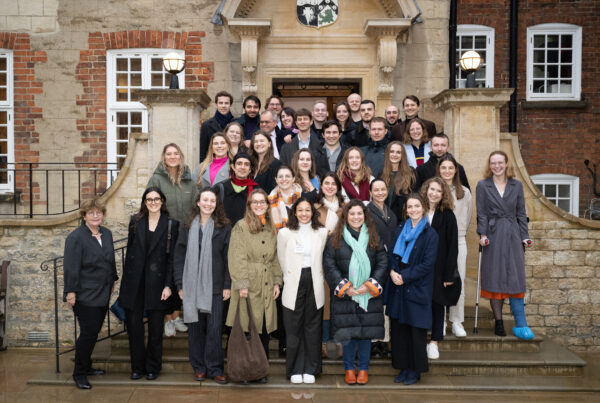
The Europaeum 2011 Conference and Summer School on The Futures of Europe: Which Way Towards 2030 was held in beautiful Santander, north Spain, exploring complexities of relationships between European nations and the European Union and future scenarios, and bringing together distinguished experts, policy-makers, media and politicians, alongside 215 graduates from the Europaeum network. A full report on the event, which started by reviewing the implications of the 2009-10 report of the Reflections Group chaired by Felipe Gonsalez, is now available. Click here to read the final report.STUDENT PAPERS/ABSTRACTS:
Click here to download all student abstracts- European Universalism: Values, Scope and Limits, Timo Miettinen (University of Helsinki)
- The Path of Croatia to the EU on the background of sentence of Ante Gotovina, Jana Kosová (Charles University in Prague)
- Czech Republic on its (slow) way to the euro, Eva Indruchová (Charles University in Prague)