Defining Political Concepts in Europe

Tags:
17/11/2006 - 00:00
18/11/2006 - 23:59
Etc/GMT

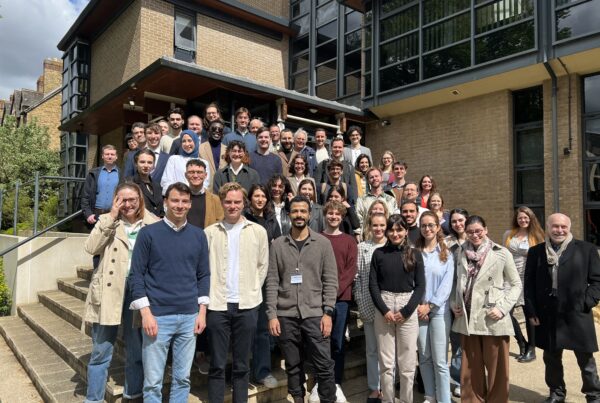
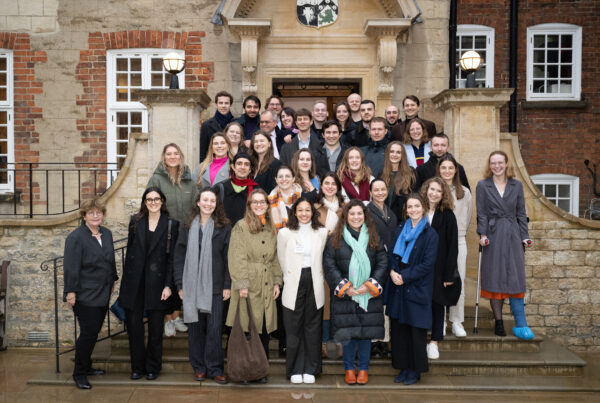
The new Europaeum European Conceptual History Research Project had its first workshop at the University of Oxford on Defining Political Concepts in Europe, on 17-18th November, 2006.

In the age of European integration and globalisation, the ever increasing cross cultural communication among citizens drawn from different regions, ideologies, social classes, and ethnicities, is becoming a most topical issue. In Europe the challenges of this interaction are highlighted within the European Union, a multilingual polity, with no single grid to show how key juridical and political concepts are used. The language borders and the state borders do not always run together, and their different political language games do not necessarily correspond to national, linguistic or even party political differences. We have to accept that there are no simple or mechanical ways for translating key political concepts; they will always carry within them historical layers with inherent historical controversies.

It was against this background that a group of European scholars met in Oxford in 17-18th November 2006 to discuss the merits of combining high-quality research in the field of European Conceptual history, with pragmatic goals such as bringing their research results to for a where problems of communication and transfer of culture can be discussed together with practitioners – policy makers, law makers, the media representatives, translators and lexicographers.

The focus of the work of the research group will be on exploring the rhetorical problems of political discourse in Europe. The group aims to find out the cultural and social differences of the usage and examine the possibilities of standardisation and limitations of harmonisation processes. Communication caps can be narrowed but it requires cross cultural awareness of the complicity of the issue.

Programme

For timings and further details, please see the full Programme

SESSION I:

1. Background
2. Aims and Objectives
3. Current Partners

SESSION II:

Earlier experiences of making comprehensive collective studies of conceptual history, intellectual history, history of ideologies and history of ideas
  • Professor Kari Palonen: Geschichtliche Grundbegriffe;
  • Professor Juan Francisco Fuentes: The Spanish, Dutch, and Finnish Projects

SESSION III:

Steering ideas for the project

  • Dr Henrik Stenius: Periphery and modernization; historical regions and globalization;
  • Professor Michael Freeden: Ideologies

SESSION IV:

Anthologies focusing on one concept or on different clusters of concepts

  • Professor Irène Herrmann: Earlier experiences: "Democracy”;
  • Dr Henrik Stenius: Advantages with the strategy of clusters

Discussion:

Which clusters should be targeted?

SESSION V:

Organisation of the project, partners, fundraising

  • Dr Henrik Stenius and Dr Paul Flather: The Future Agenda

List of Participants

PROFESSOR PANTELIS BASSAKOS is Associate Professor of Philosophy, Department of Politics and History, Panteion U., Athens. He has studied philosophy with Paul Ricoeur and his 1981 doctoral dissertation was on Plato (L''instance d'' Aporie, essai sur la theorie platonicienne du sens). He is currently working on the conceptual history of rhetoric - focusing on the renaissance "rhetoro-dialectical" paradigm. His recent publications, all in greek, include: Epicheirema kai Krisis, Athens 1999 (Argumentation and Judgment, a study of the status theory), Treis Glossai, Athens 2006 (three gloses: Aristotle, Husserl Wittgenstein, a study in ambiguity), Eikona, fos, pragmatikotita, Athens 2006 (co-edited with Prof. G. Kouzelis, Image, Light, Reality - the rhetorics of image).

DR DUNCAN KELLY teaches and writes on the history of modern political thought at the University of Sheffield. He is currently writing a study of the relationship between passions and liberty in modern political theory, and has previously published a book entitled The State of the Political: Conceptions of Politics and the State in the Thought of Max Weber, Carl Schmitt and Franz Neumann (OUP, 2003).

PROFESSOR KARI PALONEN is Professor of Political Science at the University of Jyväskylä, Finland, Director of the Finnish Centre of Excellence in Political Thought and Conceptual Change, Editor-in-Chief of Redescriptions. Yearbook of Political Thought and Conceptual History, and co-founder of the History of Political and Social Concepts Group. His recent publications include the fonograaf Eine Lobrede für Politiker. Ein Kommentar zu Max Weber’s “Politik als Beruf”(2002); Quentin Skinner. History, Politics, Rhetoric (2003); Die Entzauberung der Begriffe. Das Umschreiben der politischen Begriffe bei Quentin Skinner und Reinhart Koselleck. (2004); The Struggle with Time. A Conceptual History of ’Politics’ as an Activity (2006). He is currently working with the retorics of political times and with a retorica reinterpretation of the concept of parliamentarism.

DR PAUL FLATHER is Secretary–General of the Europaeum, an association of leading European Universities, and Fellow of Mansfield College, Oxford. He was the founding Secretary-General of the Central European University (1990-1994) originally set up in Budapest, Prague, and Warsaw by George Soros, and director of international and external affairs for Oxford University (1994-1999). Formerly, he worked at the BBC, Times Newspapers, and served as Deputy Editor of the New Statesman. His research work is on Indian political development since Independence. He has worked with dissident movements in Central Europe in the 1980s, and with race equality groups in the UK. He was an elected member of the London Council in the 1980s (chairing its committee on post-school education 1986-1990). He currently chairs the Noon Scholarship Committee, and is on the board of the Roundtable.

PROFESSOR MICHAEL FREEDEN is Professor of politics at Oxford University and Professorial Fellow at Mansfield College, where he have been tutor in politics since 1978. He is also the Director of the Centre for Political Ideologies at the DPIR, and founding editor of the Journal of Political Ideologies. Currently, he is an ESRC Professorial Fellow from 2004 to 2007, researching into the political theory of politics. His main interest is in the study of actual political thinking at various levels of articulation. Currently he is working on the specifically political features of political thinking and the distinctive methodologies that students of political thought might develop. Among his publications are: The New Liberalism: An Ideology of Social Reform (Oxford, 1978); Liberalism Divided: A Study in British Political Thought 1914-1939 (Oxford, 1986) J.A. Hobson: A Reader (London, 1988); Minutes of the Rainbow Circle 1894-1924, edited and annotated (London, 1989); Reappraising J.A. Hobson: Humanism and Welfare (ed.) (London, 1990); Rights (Buckingham, 1991); Ideologies and Political Theory: A Conceptual Approach (Oxford, 1996); Reassessing Political Ideologies: The Durability of Dissent (ed.) (London, 2001); Ideology: A Very Short Introduction (Oxford, 2003); Liberal Languages: Ideological Imaginations and Twentieth Century |Progressive Thought (Princeton, 2005); Taking Ideology Seriously: 21st Century Reconfigurations (co-editor with G. Talshir and M. Humphrey) (London, 2006)

PROFESSOR JUAN FRANCISCO FUENTES is Professor of Contemporary History at the Universidad Complutense of Madrid (Spain). He has been recently visiting scholar at Harvard University (Center for European Studies), where he carried out a research project entitled The Language of Democracy in the United States and Western Europe. A Comparative History of Political Concepts in the Twentieth Century. This project, focused specifically to the concepts of democracy, transition, totalitarianism and globalization, corresponds to one of his main lines of research: the history of the political and social concepts in the contemporary world. He is the director, with Professor Fernández Sebastián, of Diccionario político y social del siglo XIX español (2002) and he is preparing, also with Fernández Sebastián, a Dictionary corresponding the main political and social concepts of the Spanish Twentieth Century.

PROFESSOR IRENE HERMANN is Associate Professor of Contemporary History at the University of Geneva. Among her recent publications include: Les cicatrices du passé. Essai sur la gestion des conflits en Suisse (1798-1918), Berlin, Berne, New York etc., Peter Lang, 2006; Genève entre république et canton. Les vicissitudes d''une intégration nationale (1814-1846), Genève et Québec, Editions Passé-Présent et Presses de l''Université Laval, 2003; Saint-Gervais, mythes retrouvés, Genève, Editions Slatkine, Editions Saint-Gervais, 1995, (with Daniel Palmieri).

DR MARC STEARS is University Lecturer in Political Theory, University College, Oxford. His primary research interest is in the history of radical political thought, especially in the United States. He is currently writing a book entitled Radical Democrats: Reconsidering the American Democratic Tradition which examines continuities and changes in the ideas of American radical democratic movements across the twentieth century. He also works in contemporary normative political theory where he has particular interests in the relationship between ''ideal'' and ''non-ideal'' theory and the role that empirical considerations play in normative theorizing.

DR HENRIK STENIUS, is Research Director of the Centre for Nordic Studies at the Renval Institute, Helsinki University. His research has focused on mobilization in the Nordic countries and since the 1990s he has been involved in several projects concerning conceptual history. The main topic at the moment is the concept of citizen. He was co-editor together with Matti Hyvärinen, Jussi Kurunmäki, Kari Palonen and Tuija Pulkiinen of the first comprehensive book on conceptual history in the Nordic countries Käsitteet liikkeessä (Concepts in motion) published in 2003, dealing with the creation of the Finnish political language. In 2002-2003 he edited the History of Concept Newsletter of the international History of Social and Political Concepts Group. In the years 1996-1998 he was the director of the Finnish institute in London.

Conclusions

*Click here to download this Report, recently published in the Europaeum Review, Vol 8 Issue 1, Spring 2007.

Political concepts determine how people think, as a new Europaeum research group aims to show. HENRIK STENIUS and PAUL FLATHER explain.

Ever increasing integration and globalisation, means that communication and mutual understanding among citizens, drawn from different regions, ideologies, social classes, and ethnicities, is all the more critical.

The European Union is a multi-lingual polity, with no simple, or single, grid to show how crucial judicial and political concepts are actually used. Language and state borders do not always coincide, and the different political language ‘games’ do not necessarily correspond to national, linguistic, or even party political, differences.

So, one has to accept that there are no simple or mechanical ways for translating key political concepts, and that they will always carry within them historical layers with inherent historical controversies. Yet it is clearly an advantage to narrow communication gaps, while recognising natural and inevitable limitations for any such project - individuals and groups do conceptualise the world in very different ways at different times.

For a Brit, the ‘state’ can be a dubious ‘nanny’, while for the Nordics, ‘state’ is a benevolent friend. Then again the ‘citizen’ can be mostly regarded as a pro-active, republican, agent, predominantly regarded as an urban figure negating patriarchal rural practices. Yet in Scandinavia the ‘good’ citizen comes equipped with the best of civic virtues and has, to a large extent, been identified with rural communities.

It was against that this background that a group of European scholars met in Oxford last autumn to discuss the merits of combining high-quality research in this field of European conceptual history, with pragmatic goals such as bringing their research results to fora where problems of communication and the transfer of culture can be discussed together with practitioners - policy makers, law makers, the media representatives, translators and lexicographers.

The event, supported by the Europaeum and the University of Helsinki, drew in scholars from Helsinki, Paris, Madrid, Geneva, Leiden, Sheffield, Athens, and Oxford, among other universities, who agreed to set themselves up as a new research group which would aim to hold a series of workshops over coming years as a European Conceptual History Project. It is being led by Professor Henrik Stenius of Helsinki and Professor Michael Freeden of Oxford, who is also currently editor of the Journal of Political Ideologies.

The group noted though that in their ‘messages’ and use of key concepts, historical agents and groups always end up inserting their own historical experiences in the way they comprehend and use the concept. This naturally creates huge logistical research problems - though ones that the group did not plan to shy away from.

The group discussed the many different approaches adopted by conceptual historians in different European countries. It was noted that the Dutch model - focussing on an agreed, limited group of linked concepts and clustering them together - seems to suit European needs better, than alternative models.

The English model is seen more as producing a woven intellectual history, while a Germany model combines both these strands. The Spanish and the Finns had also had their own approaches.

It was agreed that choosing clusters would depend on their Europeaness, on the new perspectives that could be developed, differing from other projects currently underway in the field, the light thrown on notions of modernity, and the importance in current political debates of the key or ‘hinge’ concept. Another important theme would be take account of how key concepts are used in the core regions of Europe – heartlands such as Germany, Britain and France, where agendas have traditionally been set – as opposed to the so-called peripheries. Such diversity can throw light on hegemonic patterns of discourse, as well as help peripheral societies to see how they have related themselves to the core. The group discussed various strategies for this work, including analysing the repetitive use of concepts by specific agents in specific groups; focusing on political change, and the originality and the innovative aspects of individual conceptualisation; and analysing contestation of meanings among groups of linked concepts.

Ultimately, the group hopes to publish a series of anthologies which will help Europeans to understand themselves and each other that much better.

Contact: 
Conference Coordinators: Dr Henrik Stenius
Research Director of the Centre for Nordic Studies
Renval Institute,University of Helsinki

Professor Michael Freeden
Professor of Politics and Director of the Centre for Political Ideology
University of Oxford
Location: 
University of Oxford